Editorial Guide
VEFA and New Developments
This guide is designed for international buyers considering VEFA or other new-development purchases in France. It does not treat off-plan buying as a simple premium product category. Its purpose is to explain where commitment begins, how payment and financing logic unfold over time, what delivery risk can look like in practice, and why a new development should be approached as a staged project rather than a finished asset already under full control.
On this page
Guide contents
Jump directly to the part of the guide that matches your question.
Why VEFA needs its own decision logic
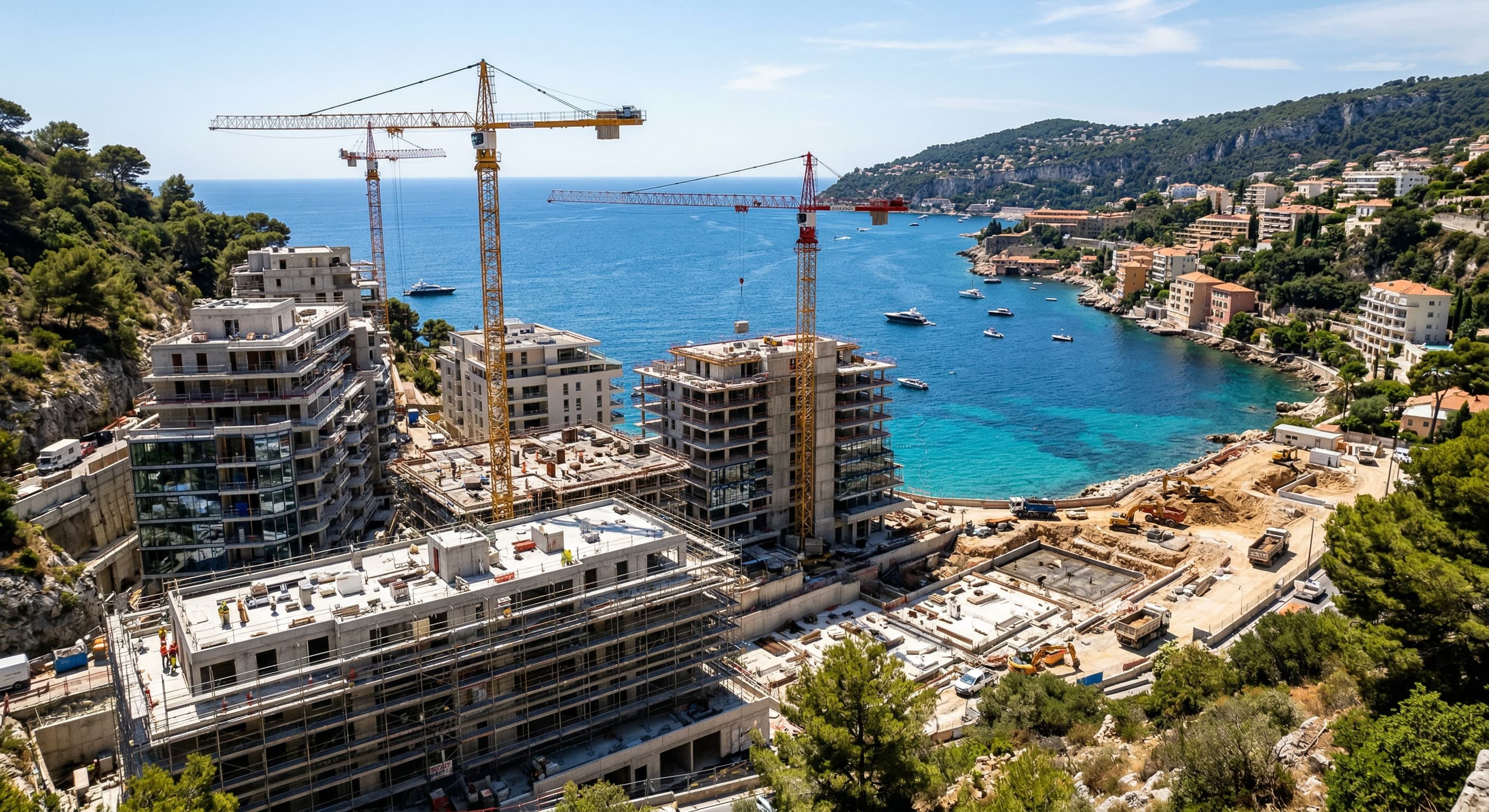
A VEFA purchase is not just a standard residential acquisition with an earlier signature date. The buyer is committing into a project that will unfold over time, with construction progress, funding calls, projected delivery dates, and practical uncertainties that do not exist in the same way in a completed resale asset.
That changes the nature of the decision. The buyer is not simply evaluating location and price. The buyer is also evaluating sequencing, execution risk, documentation quality, developer credibility, cash coordination, and how much uncertainty can be tolerated between reservation and final handover.
What buyers often underestimate in new developments
International buyers are often reassured by the apparent orderliness of a new development file. Because the asset is new, the presentation can feel cleaner and more controlled than a resale transaction. That can create a false sense that the process is simpler than it really is.
In practice, the risk is different rather than absent. The main questions shift toward what exactly is being reserved, what the staged payment path means for the buyer's liquidity and financing, how delivery timing may move, and what happens if the finished product does not align perfectly with what was first imagined.
How to use this guide
This guide works best as a parent hub. It should help readers decide whether their immediate question is about the reservation stage, the rhythm of payment calls, or the period near delivery when delay, snagging, and handover quality start to matter more directly.
It also sits naturally alongside the broader French Riviera process guide and the ownership-structuring pages. A VEFA project still has to be financed, structured, and held in a sensible way, but the off-plan sequence introduces its own buyer pressures that deserve dedicated attention.
Guide map
Browse this guide by topic
Use these sections to move through the guide by question rather than by one long flat list of articles.
What VEFA is
01
What Is VEFA and How Does It Work in France
A practical guide to what VEFA is and how it works in France, including how an off-plan purchase is structured, what stages buyers move through, and where the real risks sit.
02
How Buying Off-Plan Differs From Buying Existing Property
A practical guide to how buying off-plan differs from buying existing property, including changes in risk, visibility, timing, documentation, payment logic, and buyer discipline.
03
Is VEFA Safer Than Buying An Older Property
A practical guide to whether VEFA is actually safer than buying an older property, and why off-plan buying shifts risk rather than simply removing it.
04
What Makes Luxury VEFA Different On The Riviera
A practical guide to what makes luxury VEFA different on the Riviera, including small supply, design ambition, delivery expectations, location sensitivity, and the specific buyer profile behind premium off-plan demand.
Before reserving
01
What Should Be Checked Before Reserving An Off-Plan Property
A practical guide to what buyers should check before reserving an off-plan property, including project logic, documentation, developer credibility, specification clarity, and reservation-stage assumptions.
02
What Buyers Should Understand Before Purchasing in a New Development
A practical guide to what buyers should understand before purchasing in a new development, including project risk, staged commitment, developer reliance, and delivery uncertainty.
03
How to Assess Developer Risk Before Buying VEFA
A practical guide to how buyers should assess developer risk before buying VEFA, including track record, project credibility, documentation quality, delivery assumptions, and false confidence signals.
04
Can Foreign Buyers Purchase VEFA Easily
A practical guide to how easy or difficult VEFA is for foreign buyers in practice, including where off-plan buying gives comfort and where banking, timing, and document discipline still create friction.
05
Buying a New Development in Monaco vs France
A practical guide to the strategic difference between buying a new development in Monaco and buying one in France, including legal structure, process, buyer protection, and risk perception.
Reservation and contract stage
01
Reservation Contract Explained
A practical guide to what a reservation contract means in a VEFA or new-development purchase, and what it does and does not secure for the buyer.
02
Who Are The Key Parties In A VEFA Transaction
A practical guide to the key parties in a VEFA transaction, including why the developer, buyer, notary, guarantor, architects, and lenders each matter to the real security and execution of the deal.
03
What Documents a Buyer Should Receive Before Signing a Reservation Contract
A practical guide to what documents buyers should realistically expect and review before signing a VEFA reservation contract, and why each one matters.
04
What Deposit Is Usually Paid At Reservation Stage
A practical guide to the deposit usually paid at reservation stage in VEFA, and how buyers should think about what that early payment really means psychologically and contractually.
05
The Clauses That Matter Most In A VEFA Reservation Contract
A practical guide to the clauses that matter most in a VEFA reservation contract, and why some terms shape real buyer protection, flexibility, clarity, and risk more than others.
06
Payment Stages in VEFA
A practical guide to staged payments in VEFA, including how calls for funds relate to construction progress, financing coordination, and buyer cash planning.
07
When Are Buyers Asked To Send Funds In VEFA
A practical guide to when buyers are typically asked to send funds in VEFA, and why the payment sequence should be understood as a confidence, liquidity, and control issue rather than only a timeline.
08
Can You Withdraw From A VEFA Reservation
A practical guide to whether and how a buyer can withdraw from a VEFA reservation, and why timing, contract discipline, and decision quality matter more than vague assumptions about reversibility.
Construction and delivery risk
01
Delivery Risks in New Developments
A practical guide to delay risk, finishing issues, handover quality, and coordination problems between projected delivery and actual completion in new developments.
02
What Happens If Construction Is Delayed
A practical guide to what happens when a VEFA project is delayed, and how buyers should think about delay risk in timing, liquidity, trust, and delivery planning terms.
03
What Happens If The Developer Fails
A practical guide to what happens if the developer fails during a VEFA project, and how buyers should think about guarantees, continuity, uncertainty, and practical disruption.
04
What Happens At Delivery Of A VEFA Property
A practical guide to what happens at delivery of a VEFA property, why handover is a serious control moment, and how buyers should prepare for inspection, documentation, and follow-up.
05
How To List Reservations And Defects Properly
A practical guide to how buyers should document reservations and defects properly at VEFA delivery, and why precision, evidence, and disciplined listing matter.
06
What Is The Difference Between Minor Defects And Major Defects
A practical guide to the difference between minor defects and more serious defects in a VEFA delivery context, and why buyers need to distinguish cosmetic annoyance from consequential issues.
Guarantees and post-delivery protection
01
What Is the Garantie Financiere d'Achevement
A practical guide to the Garantie Financiere d'Achevement in VEFA, including what it is supposed to protect, what it does not mean, and why buyers should understand its limits.
02
Perfect Completion, Functional and Ten-Year Guarantees: What Is the Difference
A practical guide to the difference between perfect completion, functional, and ten-year guarantees in a new development, and why buyers should not treat them as interchangeable.
03
What Guarantees Protect Buyers After Delivery
A practical guide to the guarantees that may continue to protect buyers after delivery in a VEFA purchase, and why handover is not the end of vigilance.
04
What Is a Constitutive General Meeting in Co-Ownership
A practical guide to what a constitutive general meeting is in co-ownership, why it matters in new developments, and what buyers should understand about the first life of the building.
Full index
All pages in this guide
Use the full article index if you want to browse the entire cluster rather than enter through the thematic map above.
01
What Is VEFA and How Does It Work in France
A practical guide to what VEFA is and how it works in France, including how an off-plan purchase is structured, what stages buyers move through, and where the real risks sit.
02
How Buying Off-Plan Differs From Buying Existing Property
A practical guide to how buying off-plan differs from buying existing property, including changes in risk, visibility, timing, documentation, payment logic, and buyer discipline.
03
Is VEFA Safer Than Buying An Older Property
A practical guide to whether VEFA is actually safer than buying an older property, and why off-plan buying shifts risk rather than simply removing it.
04
What Makes Luxury VEFA Different On The Riviera
A practical guide to what makes luxury VEFA different on the Riviera, including small supply, design ambition, delivery expectations, location sensitivity, and the specific buyer profile behind premium off-plan demand.
05
What Should Be Checked Before Reserving An Off-Plan Property
A practical guide to what buyers should check before reserving an off-plan property, including project logic, documentation, developer credibility, specification clarity, and reservation-stage assumptions.
06
What Buyers Should Understand Before Purchasing in a New Development
A practical guide to what buyers should understand before purchasing in a new development, including project risk, staged commitment, developer reliance, and delivery uncertainty.
Related reading
Related reading and acquisition context
VEFA decisions still sit inside the wider French acquisition framework. The broader process guide and ownership pages remain useful, especially when a new-development purchase also raises financing, structuring, or non-resident planning questions.
Guide
Buying Property on the French Riviera
A detailed editorial guide to buying residential property on the French Riviera, covering the French acquisition process, contracts, due diligence, local constraints, and international buyer considerations.
Guide
Real Estate Tax and Ownership Structuring
A strategic editorial guide to ownership logic, pre-purchase structuring questions, and decision-making for international buyers considering residential property in France and on the French Riviera.
Next
Use the VEFA guide as a project-risk map
A new-development purchase becomes clearer when the buyer separates the reservation stage, the staged-funding period, and the delivery phase instead of treating the project as one smooth promise. Start with the subpage that matches the pressure point in your file, then reconnect it to the broader process and ownership questions.
Use this next
Move into the section that answers the most immediate procedural or structuring question first.